stablecoin chains, insights on early liquidity vs sustained activity
@Plasma launched as an L1 optimized for stablecoin usage, with zero-fee USDT transfers and a payments-first design.
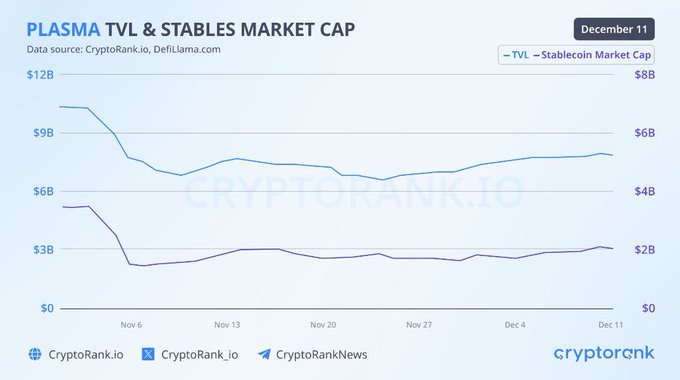
Initial traction was strong tbh, but within five days, tvl reached ~$14B, placing the plasma chain among the top 10 chains by size.
stablecoin market cap peaked around ~$6B, w/ USDT accounting for roughly 80% of supply. At launch, capital formation clearly outpaced most new L1s
something became obvious as momentum did not persist
initial user activity declined, on-chain metrics followed. tvl has since retraced to ~$7.8B, roughly 45% below peak levels, while stablecoin market cap contracted more, down ~70%
Current throughput sits near 9TPS, well below established stablecoin settlement networks like @trondao, which processes >300TPS under similar use cases
The token market also reflected the same compression.
$XPL reached a ~$3B market cap shortly after launch, imo maybe was accompanied by the aggressive distribution and large airdrop where users that only deposited just 1$ got over $10k
Overtime, uncertainty around ecosystem allocation and capital deployment coincided with sustained sell pressure. XPL now trades at roughly ~$300M in mc, around ~90% from its peak
comparably dynamics are emerging across other stablecoin-focused L1s
@stable reached ~$800M tvl shortly after mainnet, but currently processes ~0.2 tps. Its token market cap sits near XPL levels, following a ~20% decline within the first day of trading
@arc remains in public testnet, with mainnet planned for 2026 and potential token issuance still unconfirmed
@tempo, backed by stripe and paradigm, raised $500M at a $5B valuation and launched a public testnet with institutional participation, but remains pre production
Across these networks, early liquidity aggregation has been easier to achieve than sustained transactional demand. Capital inflows have consistently preceded durable usage.
imo, stablecoin native chains are currently optimized for launch-phase liquidity rather than long-term settlement intensity. whether upcoming networks convert early capital into persistent transaction throughput remains an open variable.