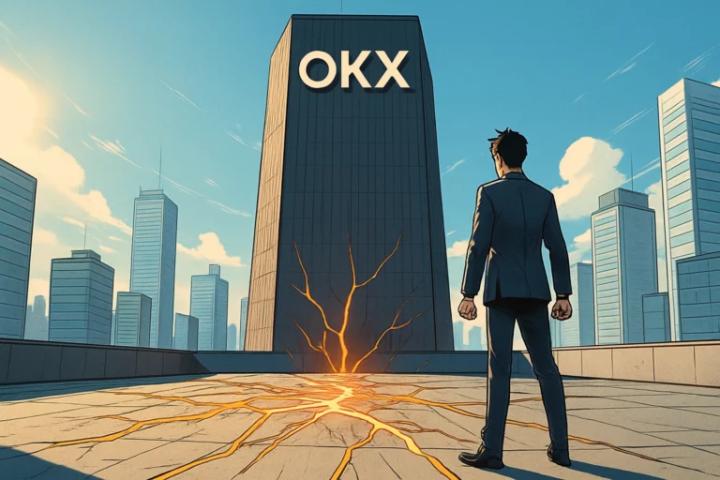
The People's Bank of China released an article this afternoon titled " Meeting Held on Coordination Mechanism for Combating Virtual Currency Trading and Speculation ," stating that it will "continue to adhere to the prohibitive policy on virtual currencies and continue to crack down on illegal financial activities related to virtual currencies." This means that not only is there no possibility of China "loosening its policies" on virtual currencies in the short term, but the high-pressure regulatory stance has actually become more normalized and institutionalized.
Author: Liu Zhengyao
Produced by: Encrypted Salad
Today, as Attorney Liu is writing this article, a major piece of news has once again stirred up a storm in the mainland crypto and even the financial circle.
The People's Bank of China released an article this afternoon titled " Meeting Held on Coordination Mechanism for Combating Virtual Currency Trading and Speculation ," stating that it will "continue to adhere to the prohibitive policy on virtual currencies and continue to crack down on illegal financial activities related to virtual currencies." This means that not only is there no possibility of China "loosening its policies" on virtual currencies in the short term, but the high-pressure regulatory stance has actually become more normalized and institutionalized.
As a lawyer with extensive experience in criminal defense and compliance in the crypto industry, my first reaction upon seeing this news wasn't surprise, but rather a sense of relief, as if the shoe had finally dropped. Many friends in the crypto often ask me: "Attorney Liu, what are the crypto policies like in Hong Kong? Is the mainland about to open up?" or "With the current bear market and the decline in cryptocurrency trading activity, will regulations be relaxed?"
Today's meeting will provide the most powerful and chilling answer to these fantasies.
At this juncture, we need to calm down, set aside the ups and downs of the candlestick charts, and start from the underlying logic of law and regulation to discuss a fundamental question: Under the tone of "continuous crackdown," does virtual currency still have a place to survive in China?
I. Understanding the reasons behind the "continuous crackdown"
If many people only read the headlines when reading the news, then as a legal professional, one must delve deeper to understand the "format" and "wording" of official articles.
The theme of this meeting was "Coordination Mechanism for Combating Virtual Currency Trading Speculation." It's important to understand that the following ministries participated: Ministry of Public Security, Cyberspace Administration of China, Financial Stability and Development Office, Supreme People's Court, Supreme People's Procuratorate, National Development and Reform Commission, Ministry of Industry and Information Technology, Ministry of Justice, People's Bank of China, State Administration for Market Regulation, State Financial Regulatory Commission, China Securities Regulatory Commission, and State Administration of Foreign Exchange. Compared to the infamous "9.24 Notice" ("Notice on Further Preventing and Handling Risks of Virtual Currency Trading Speculation") in crypto, which involved ten ministries, this meeting involved thirteen ministries, including the Ministry of Justice, Financial Stability and Development Office, and National Development and Reform Commission. This demonstrates that the importance of this meeting may even surpass that of the "9.24 Notice" (while the "departmental seating arrangement" is tedious, it is indeed useful).
This also means that cracking down on cryptocurrency speculation is not only a "violation" at the level of financial regulation, but also a "violation" or even a "crime" at the level of administrative law enforcement and criminal justice.
The meeting mentioned the need for "continued crackdown." In a legal context, the word "continued" carries significant weight; this is not merely a surprise crackdown campaign, but a long-term, normalized regulatory mechanism. Whether Bitcoin rises to $150,000 or falls to $10,000, the regulatory red line will not shift with market fluctuations.
On the surface, the reason for this meeting is that "due to various factors, speculation and hype surrounding virtual currencies have resurfaced, and related illegal and criminal activities have occurred frequently, posing new challenges and situations for risk prevention and control." However, what the central bank and thirteen other ministries are more concerned about is that virtual currencies, including stablecoins, due to their anonymity and decentralized nature, cannot be regulated in mainland China and cannot undergo KYC and AML (Know Your Customer and Anti-Money Laundering). They could be used as tools for money laundering, fundraising fraud, and other illegal and criminal activities, as well as as bridges for capital flight. This is the deeper reason for the continued crackdown.
II. The "Soil" for Virtual Currencies: A Salty Trading Market
So, is there still a place for virtual currencies to thrive in mainland China?
If we define "soil for survival" as "open, legal, and legally protected trading markets," then the answer is clear: there are none, and they are completely dead.
From 2013 and 2017 to 2021, the legal definition of virtual currency transactions by the state has been gradually upgraded. The "September 24th Notice" clearly stipulates that virtual currency-related business activities are illegal financial activities and must be strictly prohibited and resolutely cracked down upon.
If you are still attempting to open an exchange, operate an ICO project, or organize a large-scale OTC (over-the-counter) trading team in China, you will no longer face regulatory interviews, but rather criminal penalties. The specific analysis is as follows:
- 1. Exchanges and issuers: Due to the principles of "territorial jurisdiction" and "personal jurisdiction," they have no place in China. Any overseas exchange providing virtual currency trading services to Chinese residents is also classified as engaging in illegal financial activities. Domestic staff, including those responsible for technical maintenance and marketing, may face criminal risks for illegal business operations or operating a casino (when involving leveraged contract trading).
- 2. OTC (Over-the-Counter) Traders: A high-risk profession teetering on the edge of detention centers. This is currently the group facing the highest legal risk. Many friends who are OTC traders have consulted me, saying they were just doing arbitrage, so why were they arrested?
The reason is simple: you cannot control the source and destination of your funds. Under the current regulatory environment, a large amount of money involved in telecom fraud and online gambling is laundered through USDT. Engaging in OTC trading easily leads to the following three offenses:
- First, the crime of aiding and abetting cybercrime (assistance with cybercrime). If you knowingly provide payment and settlement assistance to others who are using the internet to commit crimes (or although you do not subjectively admit it, their transaction behavior is abnormal, such as buying U at high prices or circumventing risk control through chat software), you are guilty of this crime.
- Second, the crime of concealing or disguising the proceeds of crime or the proceeds of crime (concealment). This is a more serious crime than the crime of aiding and abetting. If you receive obvious "dirty money" and assist in its transfer, you will be implicated once the upstream crime is verified.
- Third, the crime of illegal business operations. Although there is still controversy in judicial practice regarding whether simply buying and selling USDT constitutes the crime of illegal business operations (I believe it does not), the logic for conviction is very sound when it involves wash trading (disguised foreign exchange trading).
III. The "Gray Area" and "Frozen Card" Dilemma for Individual Players
Since there is no fertile ground for trading, who will hold and buy/sell virtual currencies? Currently, my country's regulatory policy adopts a "discouraging, non-protecting, and self-responsible" attitude towards individual (C2C) buying and selling of virtual currencies.
1. Holding virtual currencies is not illegal. Simply holding virtual currencies such as Bitcoin does not constitute a crime under current Chinese law.
2. Investments and trading in cryptocurrencies are not protected. If you suffer losses due to cryptocurrency trading or encounter fraud, the court will most likely deem such civil legal acts invalid, and you will need to bear your losses yourself. However, as a victim involved in a criminal case related to virtual currencies, you can generally obtain due legal protection through criminal prosecution and reporting to the police.
For individuals, the biggest risk lies in the "withdrawal" process. This recent central bank meeting emphasized cracking down on this, which translates directly into an upgraded version of the traditional "card-cutting campaign." WeChat Pay has already begun strengthening its crackdown on virtual currency transactions; once WeChat officially determines a user is engaging in virtual currency transactions, the consequences range from transaction limits to account cancellation.

As a defense lawyer, the author has handled far too many cases of "frozen bank cards." Many ordinary players, simply wanting to cash out and leave, end up receiving illicit funds (dirty money), and their bank cards are frozen by public security authorities in other regions. Once a card is frozen, the process of applying for unfreezing or cooperating with investigations is extremely lengthy and painful. At best, payments on the cards are suspended; at worst, one is summoned for questioning or even criminally detained. This is the price of forcibly growing in an environment lacking legitimate transactions—you must confront the omnipresent source of pollution (dirty money).
IV. In Conclusion
Since the central bank and other ministries have once again reiterated the "continued crackdown," as a legal professional working in this industry, the author would like to offer the following advice to those in the "crypto community" and even Web3 practitioners:
- 1. Abandon any illusions about the "compliance" of cryptocurrency-related projects. In mainland China, there is currently no legal pathway for businesses involved in virtual currency transactions. Don't believe the hype from so-called "project teams" about "obtaining certain licenses"—that's self-deception.
- 2. Stay away from OTC lending and money laundering. If you are involved in foreign trade or currency exchange, never use USDT as a settlement tool for convenience or to profit from exchange rate differences. Police often consider this a money laundering scheme.
- 3. Be wary of the risks of "going global." Some teams physically travel overseas, but their clients remain domestic residents, and funds continue to circulate within the country. This kind of "fake overseas expansion" not only fails to avoid risks but also makes them easier to apprehend due to the ease of cross-border evidence collection.
- 4. Individual players, please proceed with caution. If you insist on participating, please only use spare cash and be prepared for your account to be frozen and your assets to be wiped out. Also, never help others buy or sell cryptocurrencies, and do not easily trust project promotions from "crypto trading gurus" or KOLs.
In China, virtual currencies, as a "virtual commodity" (whose property attributes are partially recognized in criminal and civil judicial practice), may still have some sporadic private ownership space; but as a "financial asset" or "settlement tool," their breeding ground in mainland China has been completely eradicated.
This meeting of the central bank's coordination mechanism is not a new beginning, but rather a reaffirmation of established policies. In this era of great change, understanding the situation, respecting the law, and upholding the bottom line are more important than seizing one or two "hundred-fold" opportunities. After all, freedom is the most valuable asset.
Disclaimer: As a blockchain information platform, the articles published on this site represent only the personal views of the authors and guests and do not reflect the position of Web3Caff. The information contained in the articles is for reference only and does not constitute any investment advice or offer. Please comply with the relevant laws and regulations of your country or region.
Welcome to the official Web3Caff community : Twitter account | Web3Caff Research Twitter account | WeChat reader group | WeChat official account