FDIC Acting Chairman Travis Hill has criticized the FDIC's stance as an obstacle for banks to explore blockchain and digital assets, stating: "I have long criticized the FDIC's approach to crypto assets and blockchain. As I said last March, the FDIC's actions 'have led to a general perception that if an institution is interested in anything related to blockchain or distributed ledger technology, that institution cannot do business.'" Since taking office, Hill has initiated a review of all regulatory communications related to crypto-banking, stating: "Since becoming Acting Chairman, I have directed staff to conduct a comprehensive review of all regulatory communications with banks seeking to offer crypto-related products or services."
To increase transparency, the FDIC has recently released 175 documents detailing its regulatory approach to banks engaging in crypto-related activities. These changes mean that banks can now custody customers' cryptocurrencies, and they will be insured by the FDIC.
Operation Choke Point 2.0: About to End, Participants May Face Accountability
How Powerful is Operation Choke Point 2.0?
We have just mentioned that Operation Choke Point 2.0 is a policy that prohibits crypto projects from accessing banking services. In fact, the scale of this action may be far greater than readers can imagine.
Blockworks describes it as: If FTX is the butterfly flapping its wings in the Amazon rainforest, then "Operation Choke Point 2.0" is the downpour now cascading over the US crypto industry.
This action is being carried out by the Biden White House, Federal Reserve, Office of the Comptroller of the Currency (OCC), Federal Deposit Insurance Corporation (FDIC), Department of Justice (DOJ), and influential figures in Congress, all with the goal of depriving the crypto industry of fiat currency channels to effectively stifle the industry.
Senators Roger Marshall, Elizabeth Warren, and John Kennedy have put pressure on Silvergate, and Signature Bank subsequently significantly reduced its crypto-related deposits in December 2023. In January 2024, the FDIC, OCC, and Federal Reserve jointly declared that they "strongly discourage" banks from supporting crypto businesses, and shortly after, Metropolitan Commercial Bank completely shut down its crypto business.
At the same time, crypto companies trying to control their own fiat currency channels are also facing resistance, as the Federal Reserve formally rejected Custodia's (formerly Avanti) application to join the Federal Reserve system in late January, an application that has been pending for over two years. Although Anchorage became the first to receive conditional approval as a national trust bank in 2021, Paxos and Protego have not yet been approved. The government's designation of crypto banks as "high-risk" will lead to four negative impacts, including higher FDIC insurance premiums, lower capital ratios (limiting overdraft capacity) from the Federal Reserve, restricted business activities, and lower regulatory review scores (affecting merger and acquisition capabilities), further exacerbating the isolation between banks and the crypto industry.
Moreover, most of the above actions are untraceable. This means that crypto companies not only cannot sue, but may not even find evidence. Many of the people driving this are hidden behind the scenes, exerting quiet pressure.
All of this began to be reversed since the Trump administration.
What is the Attitude of US Regulatory Agencies Today?
The US Congress first held a hearing on Operation Choke Point 2.0, inviting crypto industry participants to recount how they have been "choked." US Representative Meuser stated at the hearing that the Biden administration's Operation Choke Point 2.0, implemented by regulatory agencies, is specifically targeting and de-banking the digital asset ecosystem.
"The FDIC, through private conversations and formal regulatory threats, has pressured banks to refuse services to digital asset companies, their employees, and even their customers.
This is a serious abuse of power, stifling innovation and directly harming consumers by denying them access to new, potentially beneficial financial products... Just yesterday, FDIC Acting Chairman Travis Hill publicly exposed the Biden administration's Operation Choke Point activities, resulting in crypto companies being de-banked nationwide... The FDIC has promised to correct this issue going forward, and I will continue to oversee their progress and explore legislative solutions to ensure such incidents do not happen again.
"A free market can only thrive when innovation is allowed to fully develop. The role of regulators is to protect our financial system -- but not at the expense of the development of legitimate businesses like energy companies and crypto companies."
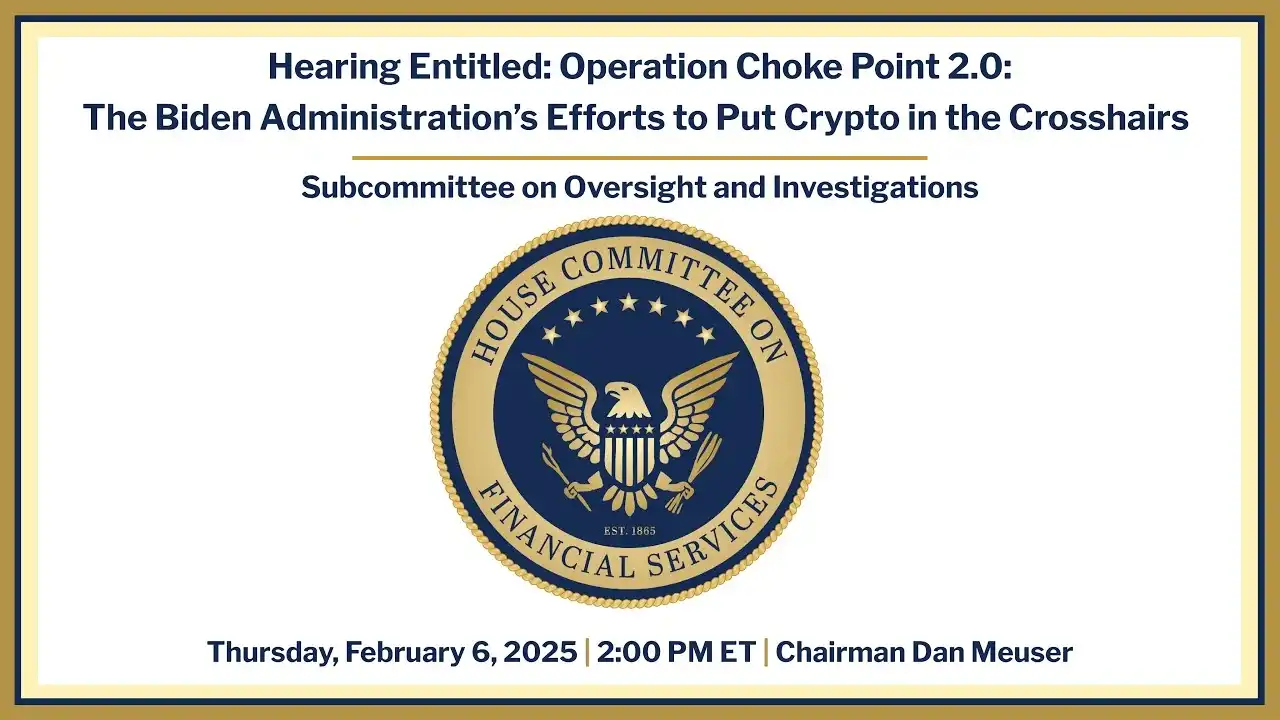 The official Congressional hearing acknowledges the existence of Operation Choke Point 2.0. Source: YouTube
Readers can savor the difference in the current official characterization.
Meanwhile, US Federal Judge Ana C. Reyes has harshly criticized the FDIC's actions in Coinbase's lawsuit against the Federal Deposit Insurance Corporation (FDIC). This lawsuit stems from Coinbase's attempt to obtain FDIC documents sent to banks as "cease and desist letters" to restrict crypto-related activities, which are evidence of Operation Choke Point 2.0. Judge Reyes pointed out that the FDIC failed to provide a large number of documents related to Coinbase's previous Freedom of Information Act (FOIA) request, and may have destroyed some case information.
Ana C. Reyes directly questioned the FDIC in the hearing: "Can you explain why you have interpreted the FOIA request so narrowly? Its content is very clear and not as you (restrictively) understand it." Excerpts of the dialogue are as follows:
"Andrew Dober (FDIC attorney): Yes, Your Honor, I can --
The Court: No, you answer my question directly.
Andrew Dober: Regarding these questions, Your Honor, I do have a statement.
The Court: No, you will answer my question now. Who took this narrow and illogical interpretation of the FOIA request?
Andrew Dober: Your Honor, I believe that was the understanding at the time --
The Court: I did not ask how you understood it, I asked who did this. This interpretation is almost laughably narrow. Who was it?"
According to The Block, VBCapital partner Scott Johnsson said: "It is shocking to see a federal judge so harshly reprimand a federal agency's attorney."
Judge Reyes not only plans to summon FDIC employees to testify in mid-February, but also warned that if the FDIC does not cooperate, "life will become very, very unpleasant for the FDIC." She further questioned whether the FDIC has taken the legally required document retention measures, and pointed out that Andrew Dober may face "serious sanctions".
And accountability is about to come. US Senator Cynthia Lummis stated that the US Senate Banking Committee has found the first concrete evidence of Operation Chokepoint 2.0 today. She said, "Rest assured, the Digital Assets Subcommittee will find the relevant parties and hold them accountable."
CFTC: Restructuring the Enforcement Division
On February 5, 2025, CFTC Acting Chairman Caroline Pham announced that the agency has restructured its Enforcement Division to focus more on combating fraudulent behavior and stop using enforcement actions as a substitute for regulatory functions. This reform aims to optimize resource allocation, improve enforcement efficiency, and ensure market integrity.
Under former Chairman Rostin Behnam, the CFTC Enforcement Division had established multiple working groups responsible for regulating areas such as insider trading, cybersecurity and emerging technologies, and environmental fraud. After this restructuring, the CFTC will streamline the Enforcement Division's working groups to two: the Complex Fraud Working Group and the Retail Fraud and General Enforcement Working Group.
The Complex Fraud Task Force will be responsible for handling complex fraud and market manipulation cases involving all asset classes, covering the entire process from investigation to litigation. The Retail Fraud and General Enforcement Task Force will focus on combating retail market fraud and other general enforcement matters.
Acting Chairman Pham stated in the statement that this adjustment aims to stop "regulation by enforcement" and improve the efficiency of the agency's operations, enabling the CFTC to more precisely target market fraud and misconduct, rather than imposing excessive compliance burdens. The CFTC announcement further emphasizes that the new structure will more effectively prevent fraud, manipulation and market abuse, ensure market fairness, while strengthening oversight and governance of enforcement actions, preventing regulatory overreach, and improving consistency and due process standards in enforcement.
Why is this statement important? First, it needs to be known that the CFTC has been involved in cases involving Binance and Coinbase, and is one of the more active US crypto regulatory agencies. Because of the commodity nature of cryptocurrencies (such as gas fees), the CFTC believes the crypto industry may fall under its regulation. At the same time, regulation by enforcement has been a common strategy of the SEC, a "you can do whatever you want, but if there's a problem, you'll be fined" kind of strategy where anything not prohibited is allowed.
However, this strategy often fails to provide any regulatory clarity: a typical example is Coinbase, where the SEC quickly approved Coinbase's initial IPO and did not provide any definition of the attributes of cryptocurrencies, but a few years later sued Coinbase, claiming that cryptocurrencies were unregistered securities and that Coinbase provided a trading platform for unregistered securities. This erratic regulatory attitude has brought a lot of uncertainty to the US crypto industry, which is why the CFTC's clear stance against regulation by enforcement is a huge positive for the crypto industry.
David Sacks: The Actions of the New Crypto Czar
David Sacks, as the White House's crypto and AI affairs officer, emphasized in a recent press conference the need to push the US to become a leader in the digital asset space and called for the establishment of a clear regulatory framework as soon as possible. He announced that the Senate and House will work together to draft cryptocurrency legislation to address the long-standing uncertainty facing the industry. Senator Bill Hagerty has introduced the GENIUS Stablecoin Act, hoping to provide legal support for the stablecoin market by regulating the stablecoin issuance process. Sacks believes that stablecoins not only can consolidate the dominance of the US dollar in the international market, but also may bring trillions of dollars in demand for US Treasuries, thereby lowering long-term interest rates and enhancing the stability of the US financial system.
At the press conference, Senator Tim Scott, chairman of the Senate Banking Committee, stated that the goal is to pass the stablecoin and digital asset bill through Congress and send it to the President for signature within 100 days. Representative French Hill of the House Financial Services Committee said that the new digital asset bill will be amended based on the FIT 21 bill to address previous loopholes, such as the actual feasibility of the SEC classifying tokens within 60 days. The Senate also plans to coordinate with FIT 21 to ensure that the bill version can ultimately be signed into law by the President.
According to CNBC's report and interviews, Sacks also particularly emphasized the negative impact of decentralization on the crypto industry. He pointed out that keeping crypto-related businesses in the US will be more beneficial for consumer protection, as when these companies are located within the US, regulatory agencies can more effectively oversee market activities. He believes that the regulatory loopholes in the Bahamas led to the largest crypto fraud case globally (referring to FTX), and the US should avoid a similar situation.
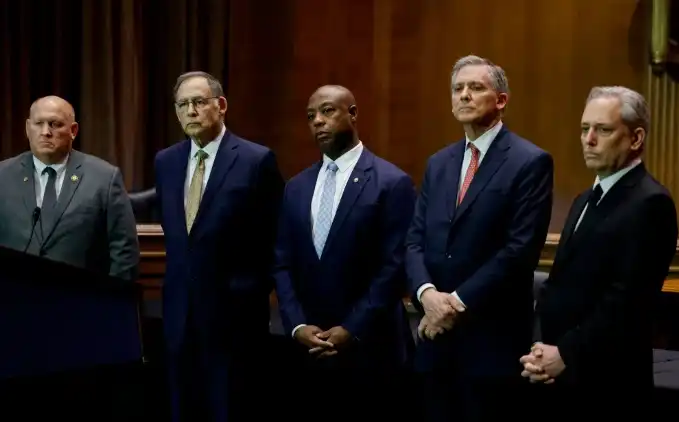
In David Sacks' (right) first press conference, he stood with Senators and Representatives. Source: Bloomberg
Sacks confirmed that the Bitcoin Reserve will be included in the White House's digital asset working group's research agenda and may include seized assets. However, he stated that the concept of a Sovereign Wealth Fund is different from the Bitcoin Reserve, and the specific policy will be handled by the incoming Treasury Secretary, Howard Lutnick. The Trump administration is exploring the potential role of Bitcoin in the national fiscal system, but the specific plan is still under discussion.
David Sacks summed up the US regulatory attitude in one sentence: "The crypto war is over. I look forward to working with all of you to create a golden age of digital assets."